
“Remote Guardianship Program”
Since 1 May 2019 the Zoological Center has run its “Remote Guardianship Program”. Under the program, anyone who wishes can become the official “remote guardian” of a particular animal living at the center. Participants choose the animal they would like to support, as well as the length of the guardianship. The animal continues to live at the center, while the guardian makes a monthly donation (the remote guardianship fee) in the amount set by the organization.
The program’s main purpose is to secure the living conditions of the animals at the center through the support of an individual — the “remote guardian”. Above all, it aims to encourage a humane attitude towards, and to help, the endangered, “Red List”-protected animals living at the center.
The daily diet of the animals at the Zoological Center is as follows: one adult bear needs 5.6 kg of food a day — fruit and vegetables, plus 1.2 kg of meat or fish. A wolf needs 3.4 kg of meat a day (chicken or beef), and a fox up to 1 kilogram of meat, also chicken or beef.
The Zoological Center thanks everyone who has already become, or will in future become, a “remote guardian” of the center’s animals. Choose the animal you like at the center and become a “remote guardian”.
Brown Bear

How they came to the Zoological Center:
Balu
In 2010, poachers killed the mother of a bear called Balu in the town of Borjomi and took the cub away to sell him. The cub was so small that the buyer could not raise him and turned to our center. We took him in the same day. Saving and raising him took a long and difficult period: he could not eat on his own, and we had to bottle-feed him for several months. During that time the cub became very dependent on people and we were unable to rehabilitate him, so he continues to live at the center.

How they came to the Zoological Center:
Tina
For 8 years, a bear named Tina was kept illegally by a high-ranking official at a state institution in Rustavi, in a 15 m² enclosure. According to the staff there, she was brought in at one month old and had lived ever since in a small reinforced-concrete enclosure. Since she was already an adult, rehabilitating her and returning her to the wild was impossible. In 2017 a place was found for her at the sanctuary and suitable conditions were prepared, and she still lives there today alongside the other bears.

How they came to the Zoological Center:
Meraba
For 2 years, a bear named Meraba was kept captive in a restaurant in the town of Akhaltsikhe, to entertain and attract the restaurant’s guests. He was living in harsh conditions and also had a skin disease, so in 2016 we decided to move him to the “bear sanctuary”. He was quite aggressive and frightened; according to the restaurant staff, drunken guests often tormented him. After such a hard life, he no longer trusted people. At the sanctuary we created as calm and free an environment as possible for him; he was examined and, with the right treatment, recovered. He is now perfectly healthy and lives together with the other bears.

How they came to the Zoological Center:
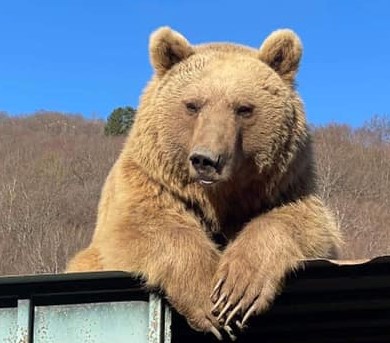
Bubu
For 2 years, a bear named Bubu was kept in very harsh conditions in the yard of a factory in the Gardabani district — in a small reinforced-concrete enclosure and appalling, unsanitary conditions. According to local residents, the bear roared constantly from hunger and thirst. In 2017 we urgently decided to move him to the bear sanctuary. Despite two years of suffering, Bubu turned out to be very gentle and friendly; he soon made friends with the bears already at the center and continues to live alongside them.
How they came to the Zoological Center:
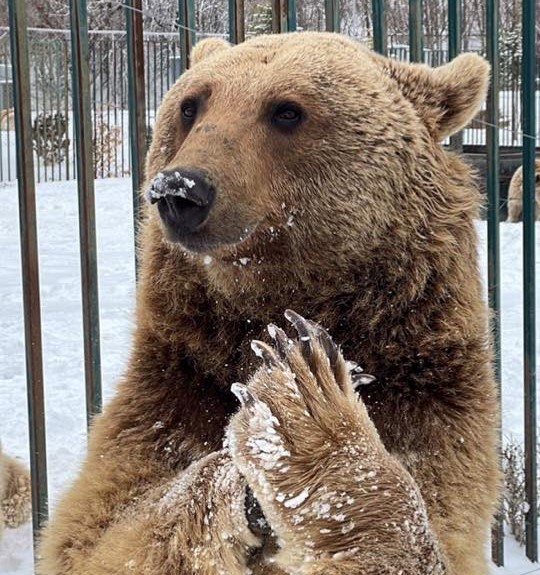
Vini
A bear cub named Vini was handed over to the sanctuary in 2016 by residents of Betania when he was 2 months old. They told us they had found the cub abandoned by the roadside at the edge of the forest. According to our information, there are no bears in the Betania forest, and the cub physically could not have walked out of it. We assume his mother was killed and he was taken home for entertainment. Vini was only 2 months old and we had to bottle-feed him; a dog belonging to one of the sanctuary’s staff helped to raise him. He still lives at the sanctuary today, with the other bears and the dog that helped raise him.
How they came to the Zoological Center:
Davliane
A bear cub named Davliane was handed over to the Zoological Center in April 2015. He was 2 months old and, as we were told, had been found at the edge of a forest between Racha and Tkibuli. The cub was traumatized and had a head injury. We took special care of him at the center — he needed hourly bottle feeding and treatment for the injured area. Unfortunately, for various reasons we could not release him into the wild, and he continues to live at the Zoological Center.

How they came to the Zoological Center:
Duche
A bear called Duche (“Duchina”) was kept by locals in the village of Tsinandali in Kakheti, chained up in a yard; we were told that poachers had given them the 3-week-old cub as a gift. The cub was terrified and stressed, unable to get used to being tied up and the unsuitable conditions, and refused to eat. After several weeks of hunger and stress he was handed over to the sanctuary. He was very thin and had acute gastroenteritis. At the sanctuary we placed him in a quiet spot and raised him on a special diet. Today he is prettier than almost any other bear at the sanctuary and lives peacefully alongside them.

How they came to the Zoological Center:
Bela
Bela was found at 1 month old at the edge of a forest in the Samtredia district and taken home for entertainment. For 3 years she was kept chained in the cellar of a house. We were told that the mother bear had been killed and that they could not bring themselves to kill the cub. After 3 hard years they contacted the center to hand her over. We brought her to the Zoological Center in 2019; she was very thin and aggressive — after three years tied up, she could not cope with such harsh conditions. At the center, the large space and plenty of things to do calmed her; she made friends with the other bears and adapted easily to her new life.

How they came to the Zoological Center:
Lela
Lela, like the other bears, had a hard and long life. She was held captive in a yard by locals in Kazbegi. She spent 9 years in a small enclosure; we were told she was used to entertain tourists, and her keepers were paid for it. In 2018 the owner who had made her suffer for those 9 years died. She was left completely alone, hungry and in terrible, unsanitary conditions. People contacted us to save her. We brought her in within a few days; after such a difficult life she was very aggressive and erratic. At the sanctuary, the calm environment and a stable diet settled her; she adapted to her new living space and made friends with the bears she found there.
How they came to the Zoological Center:
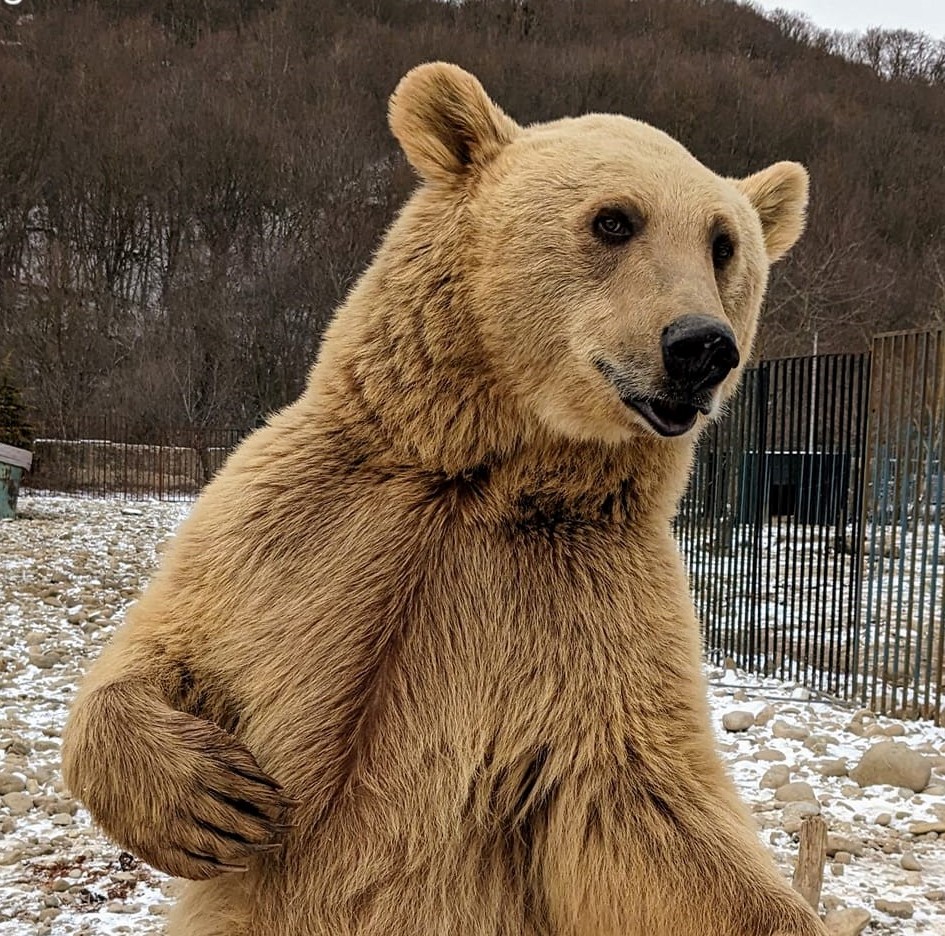
Namco
A bear cub named Namco was handed over to us in April 2019 together with his sister, Tkhaji. The cubs were 2 months old and, as we were told, had been found at the edge of a forest. Unfortunately, for various reasons we could not release them into the wild, and they continue to live at the Zoological Center.

How they came to the Zoological Center:
Tkhaji
A bear cub named Tkhaji was handed over to us in April 2019 together with her brother, Namco. The cubs were 2 months old and, as we were told, had been found at the edge of a forest. Unfortunately, for various reasons we could not release them into the wild, and they continue to live at the Zoological Center.

How they came to the Zoological Center:
Charlie
A bear cub named Charlie was handed over to the Zoological Center in February 2020. He was 1 month old and, as we were told, had been found at the edge of a forest. Unfortunately, for various reasons we could not release him into the wild, and he continues to live at the Zoological Center.

How they came to the Zoological Center:
Natani
A bear cub named Natani was handed over to the Zoological Center in April 2023. He was 2 months old and, as we were told, had been found at the edge of a forest in Racha. The cub was traumatized. We took special care of him at the center — he needed hourly bottle feeding. Unfortunately, for various reasons we could not release him into the wild, and he continues to live at the Zoological Center.

How they came to the Zoological Center:
Jazi
A bear named Jazi was kept by locals in the Zugdidi district, in a small enclosure in their yard. We were told that poachers had given them the 2-week-old cub as a gift, and he then spent 3 years in an enclosure built in the yard. We found a place for him at the Zoological Center, where he now lives peacefully with the other bears.

How they came to the Zoological Center:
Mishiko
A bear named Mishiko was found by locals at the edge of a forest in the Guria region, orphaned or lost, at 2–3 months old. They kept him at home for a few days and then handed him over to the Zoological Center to be housed, cared for and raised.
How they came to the Zoological Center:
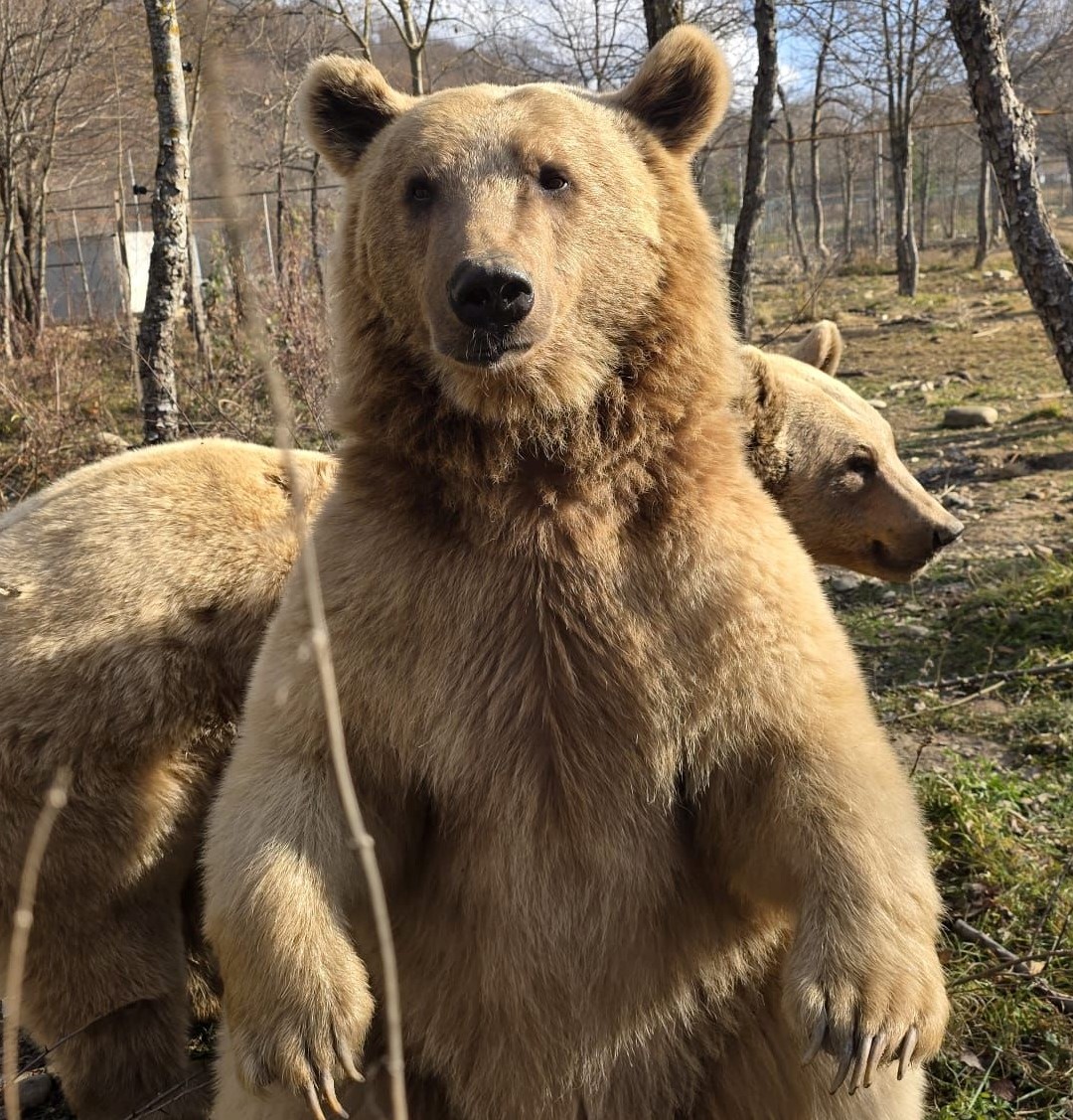
Greko
A bear named Greko was born at the Zoological Center in January 2021, together with his brother Oskari, to Lela, who by then was an elderly bear. Breeding bears was never planned at the Zoological Center, but it happened once, and since then Greko and Oskari have continued to live with their mother at the center.

How they came to the Zoological Center:
Oskari
A bear named Oskari was born at the Zoological Center in January 2021, together with his brother Greko, to Lela, who by then was an elderly bear. Breeding bears was never planned at the Zoological Center, but it happened once, and since then Greko and Oskari have continued to live with their mother at the center.
Wolves and Foxes

How they came to the Zoological Center:
Covid
A wolf named Covid was handed over to the Zoological Center in 2017 to be housed and cared for. In 2016, poachers had taken the wolf pup home and kept him chained in their yard. In the spring of 2017 the wolf was confiscated and entrusted to the Zoological Center.

How they came to the Zoological Center:
Alfa
A wolf named Alfa was entrusted to the Zoological Center by Tbilisi Zoo in 2017 to be housed and cared for. The main reason for placing the female wolf with us was that we had a male wolf, Covid, who had arrived a few months earlier and was alone. Since wolves are social animals, we took in the female as well, and they have lived together ever since.

How they came to the Zoological Center:
Sky and Max
The grey wolves Sky and Max were entrusted to us in 2023 by the Ministry of Environmental Protection to be housed and cared for. The wolves were confiscated from locals who had kept them since an early age in a small enclosure.

How they came to the Zoological Center:
Born at the Center
These are the offspring of Covid and Alfa, the wolves entrusted to the Zoological Center. They were born at the center and grew up semi-wild. They live together as one pack in a single enclosure. All of the wolves have by now been sterilized or neutered and can no longer breed.

How they came to the Zoological Center:
Roki
Roki was entrusted to the Zoological Center by the Ministry of Environmental Protection in 2022 to be housed and cared for. As a result of poaching, the fox ended up in captivity with people and lived for 2 years in unsuitable conditions; he now lives at the Zoological Center together with other foxes.

How they came to the Zoological Center:
Keto and Kote
The foxes Keto and Kote were handed over to us in spring 2024 by foreign tourists. They had been found at the roadside, probably lost, and one had a hind leg injured by dogs. From the day they arrived we gave them veterinary care; they soon recovered and the stress passed, and ever since they have lived happily at the Zoological Center.